Friends Road Trip: The Complete Guide to Making It Work
A friends road trip promises freedom, scenery, and shared playlists. So planning doesn't kill the excitement, here's the complete guide — group size, itinerary, budget, tools, and surprises.
A friends road trip is often the idea that lights everyone up at the first summer coffee: windows down, map on the phone, playlist on loop, and the feeling of answering to no one. Then reality shows up — who drives how long, where you sleep on night three, how much goes into the gas pool, and why nobody has replied to the poll in four days.
The good news: planning a friends road trip doesn't have to be a puzzle if you lay the right foundations before turning the key. This guide is built for a summer departure, a group of young adults who want to enjoy the trip without micromanaging every minute — and come home with shareable memories, not bottled-up tension.
How many people on a road trip? (finding the balance)
Group size changes everything: comfort in the car, cost per person, decision speed, and quality of shared moments.
Two or three is the smoothest format. Decisions happen fast, the car stays comfortable, and everyone can take a driving shift without burning out. On the flip side, the per-person budget is higher (gas and tolls split fewer ways).
Four is often the sweet spot for a friends road trip: one car is enough (estate or SUV depending on luggage), costs spread well, and group energy stays even. Four voices in a group chat is manageable; four people picking a restaurant at night is still possible without endless voting.
Five or six — watch the logistics. Two cars become almost mandatory, which complicates stops, parking, and staying together. Plan a lead driver per vehicle and a fixed meet-up point at each stage.
Beyond six, you're closer to a convoy or several road trips that meet at key stops. Otherwise organization becomes a full-time job for one person — not the deal for a summer with friends.
Practical rule: before locking the guest list, align on duration, comfort level, and pace. A friend who wants 600 km days and another who dreams of stopping every two hours for photos aren't on the same trip.
Planning the itinerary: stops, durations, flexibility
A successful road trip runs on a thread, not a minute-by-minute schedule. The goal of friends road trip organization is knowing where you sleep, which stops are non-negotiable, and where you leave room to improvise.
- Anchors — must-see cities or regions. Book these first in summer.
- Options — "if we have time" spots: beach, viewpoint, local market.
- Open half-days — at least one stretch with no fixed driving plan.
Realistic durations: count roughly 50–70 km/h effective on secondary roads (stops, photos, local traffic). A day capped at 4–5 hours of driving keeps everyone sharp for the evening. Beyond that, fatigue shows up as irritability and rushed decisions.
Flexible ground rules: agree on something simple — e.g. "we confirm tomorrow the night before at dinner" or "one person pilots the day, another the next." That cuts endless debate without blocking spontaneity.
Our guide how to plan a group trip goes deeper on collective decisions — the same principles apply on the road.
Budget: fuel, lodging, food — how to split it
Money is the #1 tension on a road trip. Expenses are frequent, varied, and often advanced by the same person.
| Item | Ballpark | Group tip |
|---|---|---|
| Fuel & tolls | Varies by distance | Route estimate + split if two cars |
| Lodging | €30–80/person/night in summer | Book early; Airbnb or hostel by budget |
| Food | €25–45/person/day | Mix restaurants and grocery runs |
| Activities | Depends on program | Shared vs opt-in expenses |
Pick a method before you leave — shared kitty or settle-up at the end. The guide how to split travel expenses covers three approaches with a worked example.
Two rules that save the vibe: log every shared expense on the spot; accept that some activities are optional.
Essential tools before you leave
In 2026, organizing a friends road trip lives largely on your phone — as long as info isn't scattered across five apps that don't talk to each other.
Maps & routing — Waze or Google Maps for navigation; share the day's route in the group each morning.
Lodging — Booking, Airbnb, or camping: one person can book once the group has agreed, but the link and price should be visible to everyone.
Communication — one channel (WhatsApp, Signal…) for quick alerts; avoid parallel "plan B lodging" threads half the group never sees.
- Maps — Waze or Google Maps; share the day's route each morning.
- Lodging — one group-approved booking, price visible to all.
- Communication — one channel for urgent updates.
- Budget & itinerary in one place — skip spreadsheet + chat + scattered notes.
Use Palmier to plan the itinerary, chat, and manage expenses — all in one. Every member sees the day's stops, balances, and messages in the same app. Palmier centralizes itinerary, chat, and expenses for your group.
- Valid license and vehicle insurance
- Driver rotation and break schedule
- "Anchor" nights booked and confirmed
- Expense-sharing method agreed
Handling surprises and disagreements on the road
Even the best-planned road trip hits rain, road closures, or collective fatigue.
Logistics: keep one flexible night (cancellable lodging). Assign a "weather & traffic" person each morning.
Mood clashes: the car is a small space. Plan accepted solo breaks and rotate who picks music or the next stop.
Quick decisions: "two for, one against = we go" on small calls; full consensus for big spends.
Safety: a car charger for your phone — your organization often lives there.
Keeping unforgettable memories
A road trip is the details you forget fast — the toll-booth coffee, the failed photo that becomes an inside joke.
During the trip: encourage everyone to add a photo or a few lines per day. A shared travel journal keeps one person from carrying the whole story.
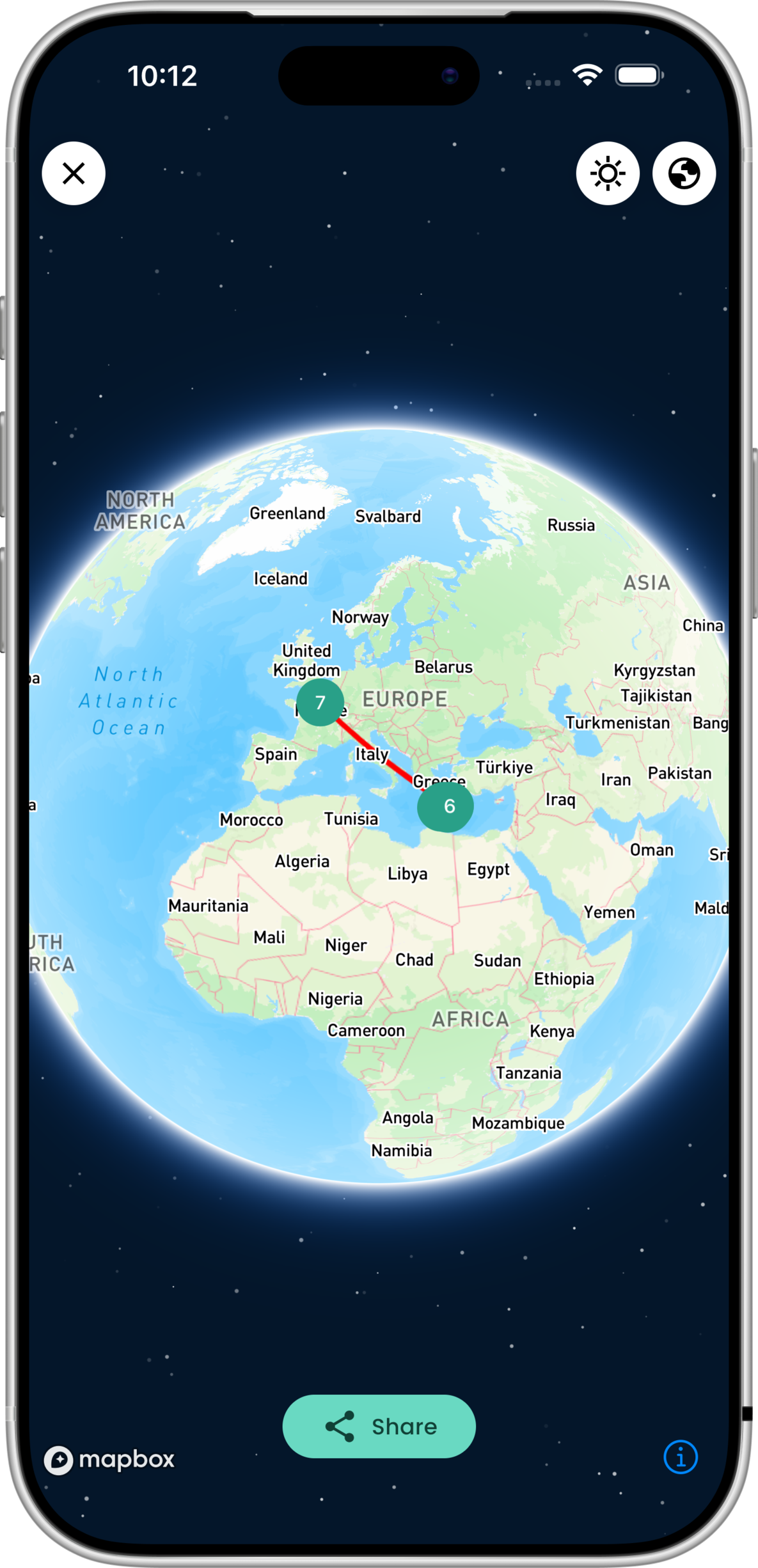
For Instagram and Pinterest: before/after maps with the route traced, carousels "day 1 / day 3 / day 5," short quotes from the group ("we got lost but found the beach"). Set a hashtag or shared album from day one — no pressure, just one place for everything.
After you return: schedule a "road trip debrief" remotely if the group is spread out; reread the journal, close the last reimbursements, and keep the itinerary for next summer.
Conclusion
A successful friends road trip isn't the one where everything goes as planned — it's the one where the group is organized enough to laugh when it doesn't.
Use Palmier to plan the itinerary, chat, and manage expenses — all in one. Download the app for free, invite your group, and hit the road with a light heart: the route is long, but organization doesn't have to be.
Palmier — itinerary, chat, expenses, and travel journal for your road trip, on iOS and Android.